GST No : 36AHRPN6398J2ZB

” OXLEY ” Packaged Drinking Water
by Aqua Feena Company, Neerudu Group of Industries, Telangana, INDIA
Article
The Journey of Hydration: How Oxley Water Bottles Are Made
In today’s fast-paced world, access to clean, safe drinking water is more crucial than ever. Behind every refreshing sip of bottled water lies a sophisticated manufacturing process, ensuring quality and convenience. At Oxley, we take pride in our commitment to delivering pure water in durable, carefully crafted bottles. Let’s take a journey through the fascinating process of how an Oxley water bottle is made.
Step 1: Sourcing the Purest Water
The foundation of our product is, of course, the water itself. We meticulously source our water from pristine, protected natural springs, ensuring it meets the highest standards of purity. Rigorous testing is performed to confirm its quality before it even enters our facility.
Step 2: The Birth of a Bottle: Preform Production
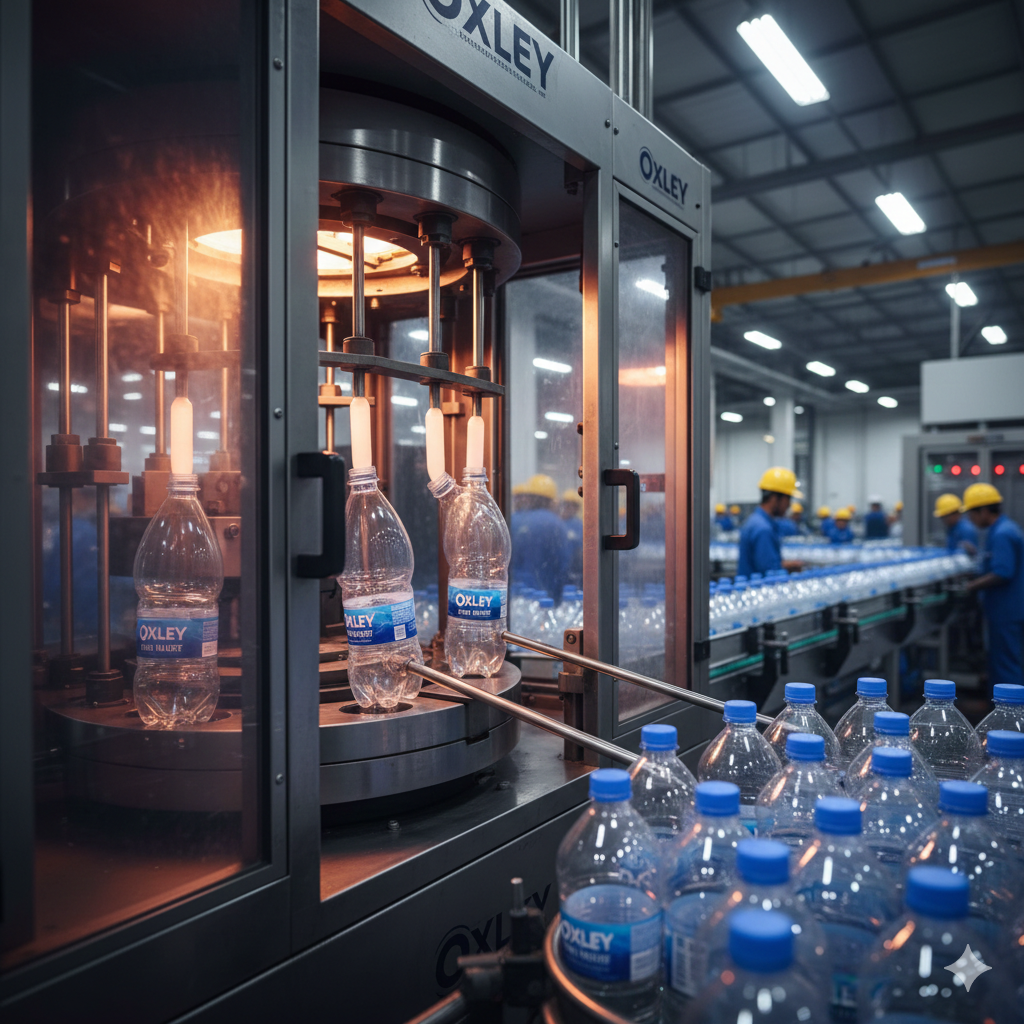
Our bottles begin their life not as a bottle, but as a small, sturdy test-tube-like structure called a “preform.” These preforms are made from PET (Polyethylene Terephthalate) plastic, chosen for its strength, clarity, and safety for food and beverage contact. The preforms arrive at our factory ready for the next transformation.
Step 3: Blowing Life into the Bottle
This is where the magic happens! The preforms are heated to a precise temperature, making the PET pliable. They are then transferred to a blow molding machine. Inside this machine, a rod stretches the preform, and high-pressure air is injected, expanding the soft plastic into the familiar shape of an Oxley water bottle. This process is incredibly fast and precise, creating thousands of bottles an hour.
Step 4: Filling and Capping
Once formed, the bottles are immediately conveyed to the filling station. Our state-of-the-art machinery fills each bottle with our purified water, ensuring precise volumes and preventing any contamination. Immediately after filling, the bottles are sealed with their caps. This entire process is highly automated and conducted in a sterile environment.